As a writer, poet, and chronic oversharer, I love stories in all their forms – fiction, fantasy, easy-to-read romance, self-help, psychological and sociological explorations, thrillers, satire, and compelling plots that dissect the absurdities of modern life. And I’m drawn to work that challenges the way I think and feel.
But above all else, I have a deep love of poetry.
I love that I can dip in and out of it, reading three poetry books at once. I love the quiet wonder of encountering a line that somehow reaches into me and rearranges something internal. How can you not love the cleverness of a tiny poem that packs a devastating punch. A line break that retells an entire story simply because of where it falls on the page.
There is something deeply powerful about poetry. It is emotion stripped bare. Where prose can sometimes hide, poetry cannot. It can take an ugly experience and render it beautiful – and that beauty only sharpens the blow. As Isabelle Correa writes:
“if you take away the line
breaks what’s the difference
between prose and poetry?The angle of the punch.
The scope of the speaker.”
It’s no wonder poetry has surged in popularity over the past few years. As a mental health crisis looms -marked by rising anxiety, depression, burnout, and the lingering effects of the pandemic, economic pressure, and social change – it makes sense that people are turning toward art as a form of expression and release. Poetry offers a way to externalise fear, longing, grief, pain and hope; to make sense of the chaos.
Still, there are entire worlds between poets who are good and those who are truly great.
These are my Top 3 Favourite Poets of 2025.
1. Isabelle Correa – Good Girl and Other Yearnings
Isabelle Correa makes poetry look effortless – and that, perhaps, is what makes her writing so quietly devastating. Her work turns the confessional genre on its head, and although I am still not quite finished with Good Girl and Other Yearnings, she has already claimed the top spot for me.
Her debut collection is beautiful, jarring, and unapologetically raw. She writes bloody – I can almost feel it on my fingertips as I turn the page. Every poem delivers a gut punch, then another. She is, without question, the queen of line breaks.
Correa’s work explores betrayal, trauma, female identity, abuse, and healing with an unflinching honesty that feels both intimate and necessary. In my opinion, every woman should read this book. It is an essential portrayal of survival and reclamation, and one that lingers long after the final page.
“A POEM IS A PLACE
I go, It’s safe
like an ambulance
is safe.
You being
inside
means
you’re already hurt.”
2. Kate Baer – What Kind of Woman
A #1 New York Times bestseller – and for very good reason.
Kate Baer is sharp, witty, and unafraid. Her poetry dissects modern womanhood with clarity and ferocity, holding nothing back. As someone who has been married before and is now in a long-term relationship, I find her voice deeply resonant – frank, honest, and unyielding. She does not ask to be liked or forgiven. She does not strive for perfection. Kate simply insists on being seen as human.
Her work is both relatable and comforting. To read Kate Baer is to feel understood, to feel less alone in the quiet frustrations and contradictions of being a woman today. This book feels important – particularly for anyone who is finding womanhood heavy, complex, or overwhelming.
Some of my favourites include College Boy, Nothing Tastes as Good as Skinny Feels, and Curveball. But my absolute favourite is Vow Renewal, a poem whose final lines hit with such precision that I thought about it for weeks afterward. Effortless on the surface, devastating beneath it.
“My friend Kirsty tells her husband she
is not his mother and he cries because all
this time, he didn’t know.”
3. Andrea Gibson – You Better Be Lightning
Andrea Gibson once wrote:
“Before I die, I want to be somebody’s favourite hiding place, the place they can put everything they know they need to survive, every secret, every solitude, every nervous prayer, and be absolutely certain I will keep it safe.”
When they passed away in July 2025, the world lost one of the greatest poets of our time. Yet their legacy continues – tenderly carried forward by their wife and fellow poet, Megan Falley, and by the countless readers and listeners who hold Andrea’s words close.
Gibson rose to prominence through spoken word poetry, shaping what has now become one of the most popular ways poetry reaches audiences today. Over the course of their career, they published seven poetry collections and seven spoken word albums. I urge you, if you haven’t already, to listen to their performances – particularly on Instagram (@andreagibson).
The collection that has most deeply captured my heart is You Better Be Lightning.
Andrea’s poetry is conversational and intimate, written in the spirit of being read aloud. It doesn’t try to impress with cleverness. Instead, it offers something achingly honest – like a friend confiding in you late at night. Their work tackles vital themes such as gender, politics, love, mental health, and social justice, yet does so in a way that feels plainspoken, relatable, and deeply human.
Their poetry doesn’t punch or scream the way Isabelle Correa’s or Kate Baer’s does (styles I also love). Instead, it devastates quietly. Slowly. So gently you might miss it – until days later, when their words are still echoing in your mind.
One of my favourites from You Better Be Lightning begins:
INSTEAD OF DEPRESSION
try calling it hibernation.
Imagine the darkness is a cave
in which you will be nurtured
by doing absolutely nothing.
Hibernating animals don’t even dream.
It’s okay if you can’t imagine
spring. Sleep through the alarm
of the world. Name your hopelessness
a quiet hollow, a place you go
to heal, a den you dug.
Sweetheart, instead
of a grave.
Honourable Mentions: Social Media Poets Shaping the Moment
If you’re wondering where the “Instapoets” are, there are a couple I couldn’t leave out.
While I personally believe nothing compares to the slow, intentional act of reading poetry on the page, social media has undeniably helped broaden poetry’s audience. It has brought poetry into mainstream culture in new and exciting ways. And even for myself, in 2025 I’ve begun experimenting with spoken word voice over reels – although I am far more comfortable hidden behind my pages.
If you dream of becoming a poet one day, I truly believe reading poetry books will take you much further than watching reels. Understanding line breaks, restraint, pacing, and impact – without relying on music, visuals, or tone – is top-tier poetic education.
Still, among the many names I could choose, these two stand out.
Lucas Jones (@lucassjoess)
Lucas Jones began sharing his poetry on Instagram in 2023 and has since amassed over half a million followers. He has become a powerful voice for young men, offering poetry that reflects the human experience in a way that feels honest, grounded, and accessible.
“In a world full of dissociating, avoidance, and farce, his words are a vessel; a mirror he holds up to society, showing us what we often fail to see for ourselves: that all we have is now.”
Known for pieces such as I Will Teach My Boys to Be Dangerous Men and Good News, If You Wish You Were Dead, his work acts as both mirror and vessel – revealing truths we often avoid confronting.
One of my favourites:
I am not a poet.
But if I was
Here’s what I’d do;
I’d find the words
For pain and beauty
So when I heal
You do too.
Celia Martinez (@diaryofaromantica)
Romance – and poetry – is far from dead, and Celia Martinez is living proof.
Her work is rich with passion, heartache, longing, and hope. She pours herself into every poem with such authenticity that even her most devastating love stories leave you feeling held. Like a conversation with a friend after a brutal breakup. Like a hug from your best friend when your heart is still sore.
Her intensity makes every poem feel lived-in. A true girl’s girl, Celia challenges the noise of modern dating culture and offers a softer, more hopeful perspective on love in the digital age.
Poetry is alive. It is evolving. And in 2025, it feels more necessary than ever.
Who were your favourite poets of the year?
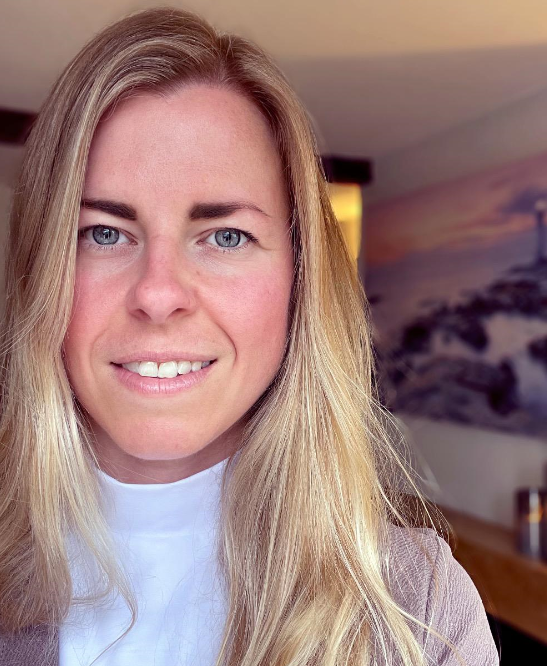
Amy Roullier
Amy Roullier is a British author and poet based in Lincolnshire. She’s a devoted lover of carbs (her true soulmate) and is currently navigating a midlife crisis one run at a time. Her NEW collection: Sundays with Myself, is coming 3rd February 2026. Her debut poetry collection Silent Reflections of a Fragile Heart, is out now on amazon. To subscribe to weekly essays on embracing life on your own terms, romanticizing solitude, and empowering independence, check out her Substack, Independently Yours. For more of her emotional poetry and reflections, follow her on insta @aroullier_writes
buy me a coffee: If you enjoy my words, buying me a coffee helps fuel the late nights, the early mornings, and the dream of becoming the writer I’ve always wanted to be. Thank you for being here. Donate here.